
Ascent
Fully reusable super heavy rocket
Overview
Ascent is two stages of stainless steel: a booster with 33 Kiln engines and a ship with six. Both are designed to come back and fly again within hours. The booster returns to the tower at LC-2, which catches it with two arms.
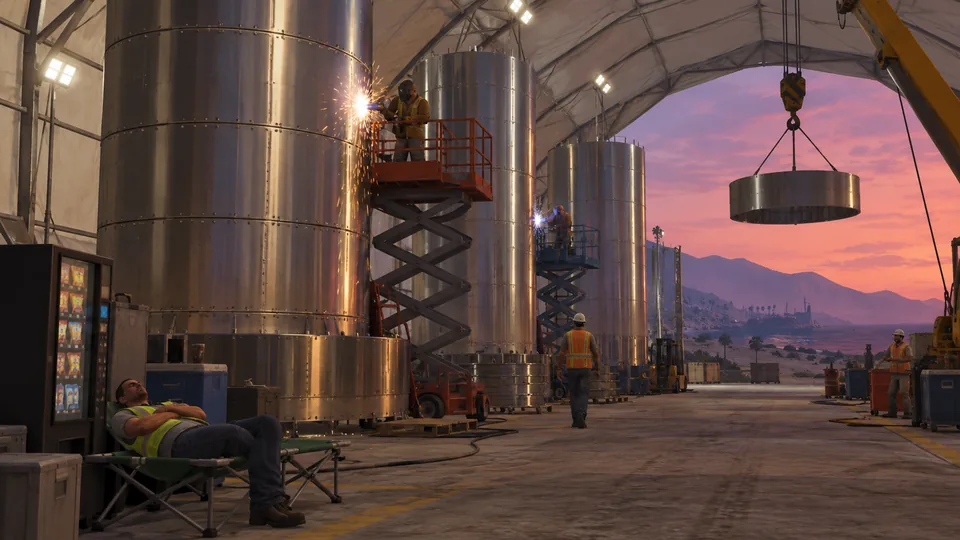
Ascent is built and tested in the open at Veil City. Each flight test is meant to go further than the last.1
| Height, full stack | 124 m |
|---|---|
| Diameter | 9.2 m |
| Payload to low orbit, reusable | 150,000 kg |
| Booster engines | 33 Kiln |
| Ship engines | 6 Kiln |
| Thrust at liftoff | 74,500 kN |

Hot staging
The ship lights its engines while it is still attached to the booster, and pushes away. It saves fuel and time, and it is the loudest second of the flight.
The booster turns around, flies back toward the cape and slows for the catch. The ship carries on to orbit.
Flight tests
| Flight | Date | Result |
|---|---|---|
| 1 | Apr 20, 2025 | Cleared the tower. Flight terminated at T+2:41 after the stages did not separate.2 |
| 2 | Aug 11, 2025 | Stages separated. Booster lost during boostback. Ship lost during ascent. |
| 3 | Dec 6, 2025 | Ship reached space. Lost on reentry over the Pacific. |
| 4 | Mar 14, 2026 | Ship reached space and reentered. Splashdown 40 km from target.3 |
| 5 | Jun 27, 2026 | Booster splashdown. Ship lost a heat-shield tile and the rest of itself. |
| 6 | Sep 30, 2026 | Vehicle disassembled at T+3:12. Test objectives exceeded.4 |
| 7 | Nov 14 07:30 PT | Planned. First booster catch attempt. |
Mars
Why Ascent exists
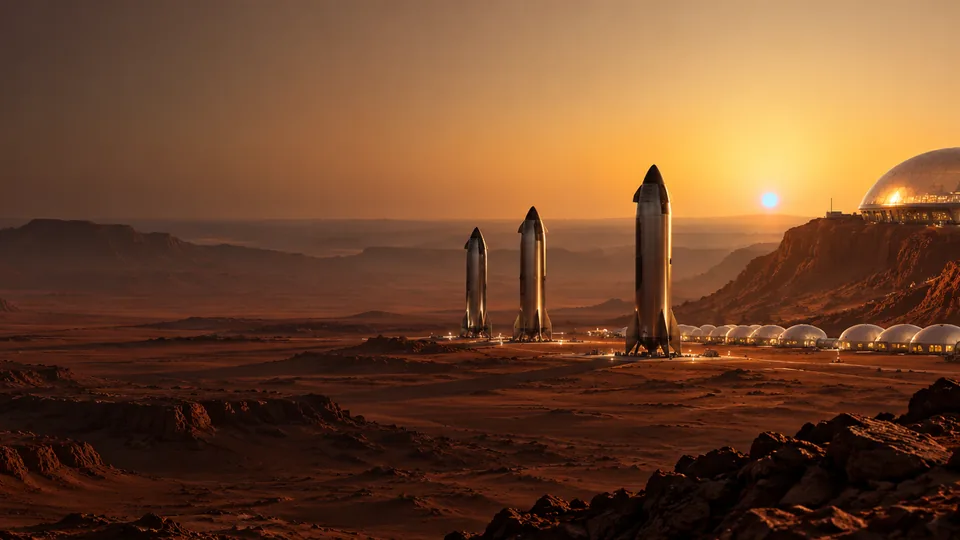
Corvex was founded to make life multiplanetary. Ascent is sized to refuel in orbit and carry a hundred people and their supplies to Mars on each flight. The first uncrewed ships are planned for a launch window in the late 2020s.6
- Flight tests are considered successful if they produce data. Every flight has produced data.
- Damage to LC-2 was within expectations, which were revised after the flight.
- The target was moved 40 km after the flight.
- Debris fell within the designated hazard area and parts of Paleto Bay. Affected households received a one-month Starveil credit.
- Production rate assumes no change to the design. The design changes about every three weeks.
- Seats on the first crewed flight will be offered to Starveil Priority customers first. Priority customers should not rely on this.